

Purchasing is often treated as a transactional function: issue a request for quotation, compare prices, place the order, and move on. In reality, the decisions made at this stage determine far more than the unit cost that appears on a spreadsheet. Late deliveries, quality failures, excess inventory, and supply disruptions routinely erase expected savings and create operational problems that reach well beyond the purchasing department.These challenges become more pronounced when sourcing parts internationally. Distance, time zones, language differences, and complex logistics raise the stakes. Many companies respond by working with a sourcing agent. The effectiveness of that relationship depends heavily on how well the purchaser understands the practical realities of international supply. The following fourteen points capture the issues that consistently influence outcomes and help determine whether a sourcing partner in China will deliver real value or simply add another layer of cost.
1. The lowest unit price rarely equals the lowest total cost
A lower quoted price attracts attention, yet the full cost of ownership includes freight, duties, inspection, potential expediting, inventory carrying costs, and the expense of managing quality problems. When these elements are ignored, apparent savings frequently reverse into higher overall expenditure. Transactions with Chinese suppliers amplify the effect through currency movements, fuel surcharges, and variable customs clearance times. A structured landed-cost calculation performed before supplier selection prevents most of these surprises. It is ideal when you work with a company that is willing to do a supplier search to provide you many options.
2. Lead times remain estimates until historical data confirms them
Suppliers commonly present optimistic schedules. An eight-week commitment loses credibility when actual performance over the previous year averaged closer to eleven weeks. Requesting on-time delivery percentages, ideally segmented by product type, provides a more reliable basis for planning. Shipments from China introduce additional variables such as port congestion and customs examinations. Treating quoted lead times as best-case figures and building modest buffers accordingly reduces the frequency of production interruptions. It is vital to work with a reliable sourcing agent that has direct access to the manufacturers and can obtain accurate lead times.
3. Clear and complete specifications outweigh aggressive price negotiation
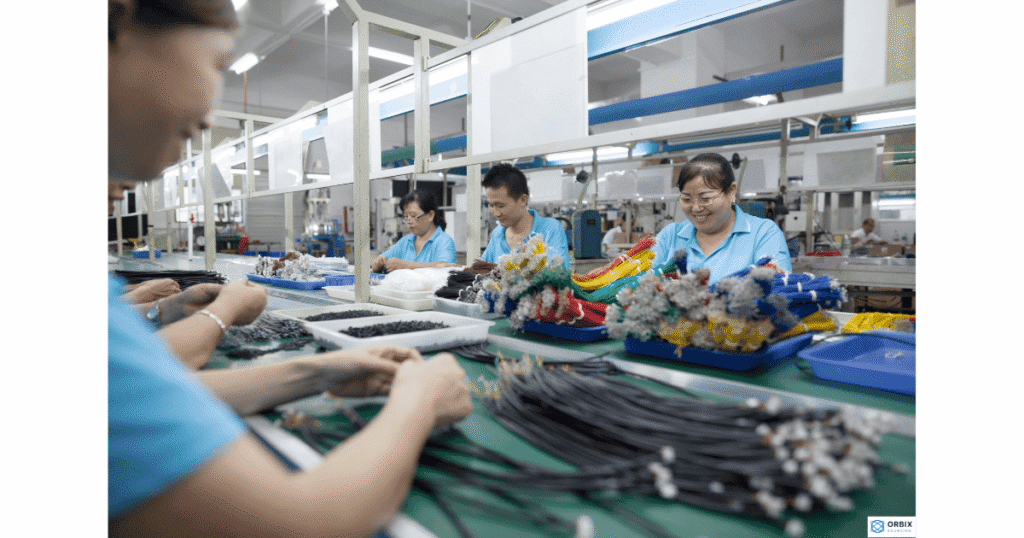
Incomplete drawings, missing tolerances, and vague packaging requirements generate more cost than most negotiation sessions recover. When a supplier must interpret requirements, the result is either nonconforming product or a price that includes contingency for uncertainty. Defining critical dimensions, surface finishes, approved alternates, and acceptance criteria before releasing the order shortens the path from purchase order to usable material. Photographic standards of acceptable and unacceptable conditions further limit ambiguity when working with factories in China. Reliable partners will ensure that these critical documents are shared early in the process.
4. Payment terms function as a commercial lever
Extended payment terms appear advantageous on paper until the supplier adjusts pricing upward or assigns lower priority during periods of constrained capacity. In China-based sourcing, payment structure also signals the seriousness of the business relationship. Some manufacturers offer improved pricing or faster access to capacity when deposits are provided or invoices are settled more promptly. The decision should weigh service reliability against pure cash-flow considerations rather than maximizing days payable in isolation. Pricing transparency along with terms is critical to discuss regularly with the professional sourcing agent.
5. Single-sourcing critical parts creates measurable risk
Concentrating volume with one supplier simplifies administration and can improve price leverage. The same concentration leaves production exposed when that supplier experiences a fire, labor disruption, or quality crisis. Dual sourcing is not practical for every item, yet for components capable of stopping a line it functions as lower-cost insurance. Supply chains that run through China increase the exposure through political developments, shipping interruptions, and unexpected factory closures. Maintaining a qualified alternative source, even at a modest share of volume, preserves options when primary supply is disrupted. A qualified sourcing agent understands this and will discuss options with their network of qualified suppliers.
6. Quality shortfalls cost more than most calculations capture

A part priced five percent lower that arrives with elevated defect rates can eliminate the savings through scrap, rework, line stoppages, and customer returns. Tracking actual incoming quality and first-pass yield provides a clearer picture than the purchase-order price alone. Requesting recent process performance data on comparable products reveals whether quality is managed systematically. Quality issues originating in China compound the difficulty because the feedback cycle is longer; by the time a problem is identified, another shipment may already be in transit. Incorporating inspection plans and clear acceptance criteria into initial orders limits the scale of later discoveries. However, by working with a reliable agent, it ensures that every part is sampled before a mass production order is placed and quality control is an essential priority from the start.
7. Supplier relationships continue to influence outcomes
Digital tools allow entire sourcing processes to operate through portals and email. When capacity tightens or problems arise, however, suppliers remember which customers communicate clearly, pay according to agreed terms, and treat the relationship as collaborative rather than purely transactional. Those relationships frequently determine access to scarce capacity or expedited production slots. The effect is stronger with Chinese suppliers, where time-zone differences and language barriers already complicate communication. Consistent, professional interaction tends to produce better visibility and faster resolution when issues surface. This can be mitigated through working with a sourcing agent that utilizes modern communication methods such as Gmail, Whatsapp, or Slack.
8. Inventory carries cost, yet stockouts usually cost more

Excess inventory consumes cash and warehouse space. Insufficient inventory creates production stoppages whose expense typically exceeds the cost of carrying a measured buffer. The appropriate level depends on actual lead-time variability and demand patterns rather than theoretical averages. Sourcing from China increases that variability. A domestic lead time that occasionally stretches remains manageable; an international lead time that moves from eight weeks to fourteen requires different safety-stock calculations. Purchasing decisions should reflect observed performance rather than optimistic quotes. In addition, companies must be mindful with their inventory turnover rate and need to work with a sourcing company that is willing to accept multiple releases over a period of time.
9. Design changes after production begins prove expensive
Once tooling is completed or production is underway, even modest changes generate cost and delay. The later the change occurs, the higher the impact. Freezing the design as early as practical and managing subsequent revisions through formal engineering change processes that quantify cost and schedule effects limits unnecessary expense. Tooling and production located in China can lengthen the consequences. A mold or fabrication line already running panels extends the time required to implement modifications. Releasing large orders only after design stability is confirmed reduces repeated disruption.
10. Data outperforms opinion and institutional memory

Effective purchasing relies on consistent records of on-time delivery by supplier, actual quality results, price trends, and total cost of ownership for key items. Reliance on informal recollection or the statement that a supplier has always been used provides a weaker foundation. When performance begins to decline, data surfaces the trend early. When a new source appears attractive on price alone, historical records help assess the associated risk. Sourcing from China multiplies the variables—currency movements, freight rates, duty adjustments—so the value of clean tracking increases.
11. Tooling ownership and control matter more than most buyers realize
Many purchasers focus on the unit price of the finished part and give insufficient attention to who owns the tooling, molds, fixtures, or custom test equipment. When ownership resides solely with the supplier, switching sources later becomes difficult and expensive. Clear contractual language regarding ownership, storage, maintenance, and transfer rights protects the buyer’s long-term flexibility. This consideration is especially relevant in China-based arrangements, where physical distance and legal jurisdiction add complexity to any future recovery of tooling.
12. Communication gaps and time-zone friction are real cost drivers
Misunderstandings that would be resolved in a short conversation domestically can stretch across days when teams operate in different time zones and languages. Incomplete responses, delayed clarifications, and assumptions about requirements accumulate into schedule slippage and quality issues. Establishing preferred communication channels, response-time expectations, and designated points of contact reduces friction. Written confirmations of critical agreements further limit later disputes.
13. Capacity and financial stability of the supplier must be verified
A competitive quote has limited value if the supplier lacks the physical capacity to meet volume requirements or the financial strength to sustain operations through temporary disruptions. Reviewing equipment lists, current utilization rates, and basic indicators of financial health provides early warning of potential problems. Factories in China introduce additional layers of opacity; local market conditions, ownership changes, and labor availability can shift rapidly. Periodic verification of these factors reduces the likelihood of unexpected capacity shortfalls.
14. Exit strategy and contingency planning should be built in from the start
Every supply relationship eventually ends or needs to be adjusted. Purchasers who begin with a clear understanding of how tooling, drawings, inventory, and open orders would be handled in a transition are better positioned when change becomes necessary. Dual sourcing for critical items, documented process knowledge, and contractual language supporting orderly exits form the practical foundation of contingency planning. Relationships that run through China make these preparations more important because physical distance and legal differences slow any recovery effort.
Working effectively with a sourcing agent in China
Each of the fourteen points gains weight once sourcing moves to China. Longer feedback loops, additional parties in the logistics chain, and reduced day-to-day visibility raise the consequences of incomplete analysis. Organizations that attempt to manage Chinese suppliers with methods designed for local relationships frequently encounter uneven results. A capable sourcing agent can help bridge these gaps by handling factory evaluation, manufacturability reviews, realistic inspection planning, tooling agreements, and day-to-day coordination. The value of that support depends on whether the agent operates according to the same principles outlined above. Purchasers who understand these fourteen considerations are better equipped to select and manage a partner that reduces risk rather than simply adding another intermediary.The objective is not perfection. It is fewer disruptions, more accurate total-cost decisions, and a supply base that supports production rather than interrupting it. Purchasers who systematically address these points tend to achieve more consistent results, whether they work directly with factories or through a specialized sourcing agent focused on China.
How to get the best sourcing agent in China?
Finding a reliable China sourcing agent is one of the most important decisions a purchaser can make. The right partner reduces risk, improves quality control, shortens communication loops, and helps manage total cost. The wrong one simply adds another layer of complexity and cost.
Most companies begin the search by looking at websites, reviewing directories, or asking for referrals. While those steps provide a starting point, they rarely reveal whether an agent truly understands engineering requirements, quality systems, tooling ownership, capacity verification, or the practical realities of working with Chinese factories. The fourteen points covered earlier offer a practical filter for evaluating any potential partner.
Once those criteria are clear, the next step is straightforward. Contact Orbix Sourcing and begin working with them today. Orbix Sourcing is the solution for companies that need engineering-driven sourcing support focused on China and other key manufacturing regions. Their team handles factory evaluation, manufacturability reviews, quality planning, tooling agreements, and day-to-day coordination so that purchasers can make decisions based on complete information rather than incomplete quotes.
There is no need for a lengthy trial-and-error process with multiple agents. Reach out to Orbix Sourcing now, share the drawings or part requirements, and start building a more reliable supply chain. They respond quickly and focus on practical results rather than generic promises.
Resources
Stanford University – Selecting a Supplier or Independent Contractor
https://fingate.stanford.edu/purchasing-contracts/selecting-supplier (retrieved August 5, 2026)Princeton University – International Suppliers & Import Guidance
https://finance.princeton.edu/buying-paying/buy-supplies-and-equipment/international-suppliers-import-guidance (retrieved August 5, 2026)The Ohio State University Fisher College of Business – Total Cost of Ownership and Sourcing Approaches (Teaching Materials)
https://files.fisher.osu.edu/public/2020-07/Teaching%20Version%20Gray_Helper_Osborn_TVC%202020%2007%2023.pdf (retrieved August 5, 2026)